The Difference Between Enhancements and Continuous Provision
Structure, Simplicity and Why Both Matter
One of the most common misconceptions about Continuous Provision in KS1 is this:
“That area needs changing.”
Or
“What are you enhancing this week?”
It’s often asked with good intention. But underneath it sits a misunderstanding. Continuous Provision and enhancements are not the same thing. They serve different purposes. And when we blur the line between them, classrooms quickly become overcomplicated. Let’s untangle it.
Continuous Provision: The Constant
Continuous Provision is the foundation. It is what is available all the time. It is steady. Predictable. Reliable.
In your classroom, this might include:
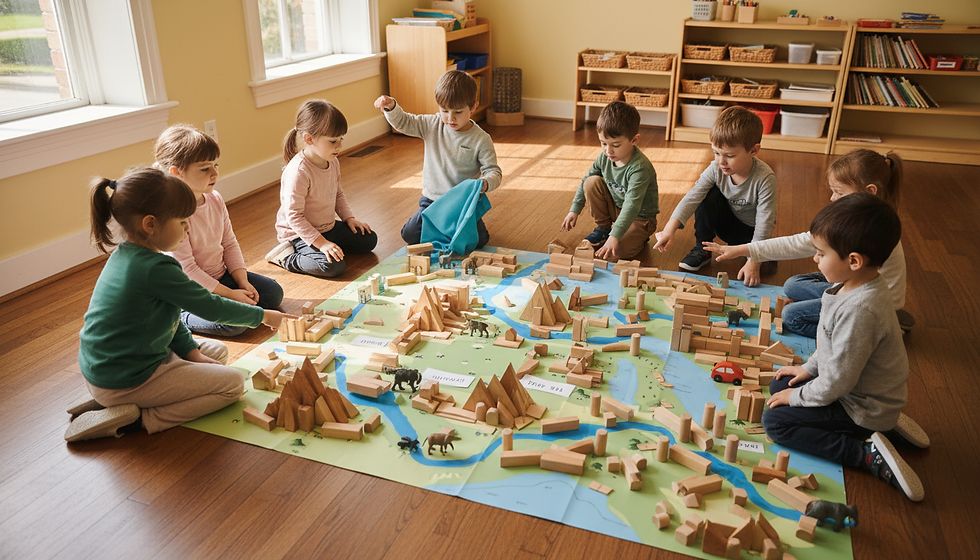
• Construction
• Small world
• Sand
• Water
• Playdough
• Creative area
• Role play
• Reading corner
• Fine motor
• Investigation
These areas do not disappear every week.
They do not transform dramatically. They remain. Because children need familiarity.
Continuous Provision builds:
• Independence
• Communication
• Confidence
• Problem-solving
• Social development
• Executive function
It is not there to chase the weekly objective.
It is there to develop the child.

Enhancements: The Curriculum Thread
Enhancements are different. They are deliberate additions to provision areas that link to current curriculum learning. They are subtle.
Intentional. Responsive. If you are teaching measurement, you might add:
• Tape measures to construction
• Capacity challenges to water
• Comparison vocabulary prompts
If you are teaching instructions, you might add:
• Clipboards in construction
• “How to Build” cards
• Labelled diagrams in small world
The base area remains the same. The enhancement nudges thinking. That is the key difference. Continuous Provision is constant. Enhancements are curriculum-linked adjustments.
The Common Mistake: Over-Enhancing
When we misunderstand this balance, classrooms become exhausting.
Every week:
• New themes
• New displays
• New setups
• New role play transformations
The environment becomes unstable. Children lose familiarity. Independence weakens. And teachers burn out. Continuous Provision does not require weekly reinvention. In fact, stability is its strength. Enhancements should be light touches — not full renovations.
Why Continuous Provision Must Stay Simple
Children thrive on repetition. When they return to the same construction area daily, they are not stagnating. They are refining. Strengthening neural pathways. Building mastery. Increasing complexity. Repetition is not boredom. It is consolidation. When areas remain consistent, children deepen rather than skim. If we change everything too often, we interrupt that deepening process.
Why Enhancements Still Matter
This does not mean we abandon curriculum focus. Enhancements are what keep provision aligned with explicit teaching.
They ensure:
• Knowledge is revisited.
• Vocabulary is embedded.
• Skills are applied.
• Concepts are strengthened.
Without enhancements, provision can drift.
Without Continuous Provision, enhancements become isolated tasks. The balance matters.
Continuous Provision Develops the Learner
Enhancements develop knowledge. Continuous Provision develops the learner.
Through constant areas, children practise:
• Resilience
• Emotional regulation
• Collaboration
• Creativity
• Flexible thinking
• Self-management
These skills underpin academic success. They cannot be built through adult-led tasks alone.
They are practised in open-ended, consistent spaces.
A Simple Way to Think About It
If you removed all enhancements tomorrow, Continuous Provision would still function.
Children would still build.
Create.
Collaborate.
Investigate.
Communicate.
If you removed Continuous Provision and only kept enhancements, the classroom would feel task-led and fragmented. Continuous Provision is the soil. Enhancements are the nutrients.
Both are important. But one must remain steady.

The Role of the Adult
Our role is to:
• Teach explicitly.
• Observe carefully.
• Enhance intentionally.
• Avoid overcomplicating.
• Protect repetition.
We do not need themed transformations every week. We need clarity. Children do not need constant novelty. They need security. From security, depth grows.
Continuous Provision is not a backdrop for enhancements. It is the foundation of the classroom. Enhancements are gentle curriculum threads woven through that foundation. When we keep this distinction clear, everything settles. The room feels calmer. Planning becomes manageable. Children become more independent. Learning becomes deeper.
Continuous Provision stays steady. Enhancements guide direction. And together, they create a classroom that is both developmentally appropriate and academically ambitious.
Simple. Intentional. Powerful